
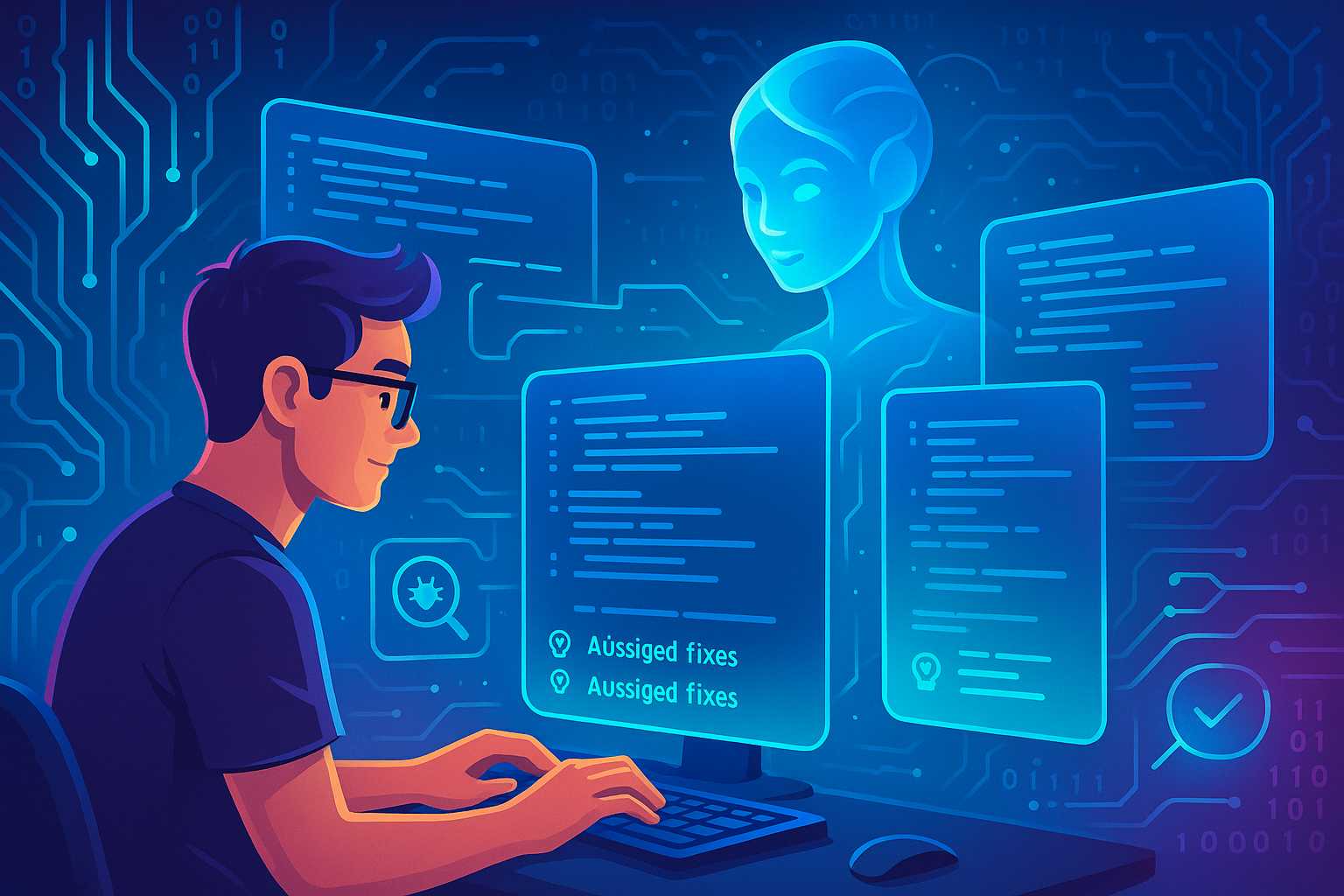

For decades, debugging has been one of the most mentally taxing tasks in software development. Developers sift through logs, insert breakpoints, and attempt to reproduce subtle bugs. But the landscape is changing rapidly with the advent of AI coding agents—advanced systems that can help track down, explain, and even fix code defects.
In this article, we’ll explore how AI coding agents are shifting the debugging paradigm, what new workflows are emerging, and how you can harness their capabilities for faster, smarter problem solving.
How AI Agents Approach Debugging
AI coding agents operate on a combination of code understanding, execution simulation, and context gathering. By ingesting your codebase, recent diffs, and even relevant issue tracker tickets, agents can:
- Identify likely error sources based on patterns and past bug reports
- Generate step-by-step explanations of exceptions or failed tests
- Suggest targeted fixes or even automatically draft pull requests with remediations
- Learn from your feedback to refine future debugging suggestions
Practical Debugging Scenarios
Let’s consider a few real-world examples:
Scenario 1: Reproducing Elusive Bugs
A user reports a “sometimes” crash in production, but you can’t replicate it locally. An AI agent can scan logs, inspect execution traces, and propose test cases mimicking the user’s environment, drastically narrowing down search time.
Scenario 2: Explaining Cryptic Stack Traces
Instead of copy-pasting error messages into search engines, developers can ask an AI agent to explain stack traces in plain language and pinpoint the root cause in code, referencing commit history and code comments.
Scenario 3: Automated Fix Suggestions
Beyond diagnosis, advanced agents generate fix suggestions or even PRs. After summarizing the likely root cause, the agent drafts a code change, which developers review before merging—accelerating bug patching while maintaining oversight.
Best Practices for Integrating Agents into Your Workflow
Maximize your results by following these guidelines:
- Retrain the agent on project-specific data: The more context AI has, the smarter its suggestions.
- Embed agents in CI pipelines: Catch new bugs early by letting agents review diffs or test failures automatically (see my previous article on integrating agents in CI-pipelines).
- Keep humans in the loop: Use agent recommendations as a starting point, not a black box—always review and adapt suggestions.
Challenges and Considerations
While promising, AI-powered debugging has caveats. Privacy concerns arise when sharing codebases with external agents. Agents may confidently suggest fixes that are subtly flawed. Monitoring and continuous validation remain essential.
AI coding agents aren’t replacing debugging—yet—but they are making it much faster and more approachable. As their code understanding and context awareness improve, these assistants will be an invaluable tool for any modern developer’s toolbox.
Ready to supercharge your debugging? Experiment with AI agents in your favorite IDE or CI pipeline and see how quickly you can squash your next bug!
Leave a Reply
You must be logged in to post a comment.