
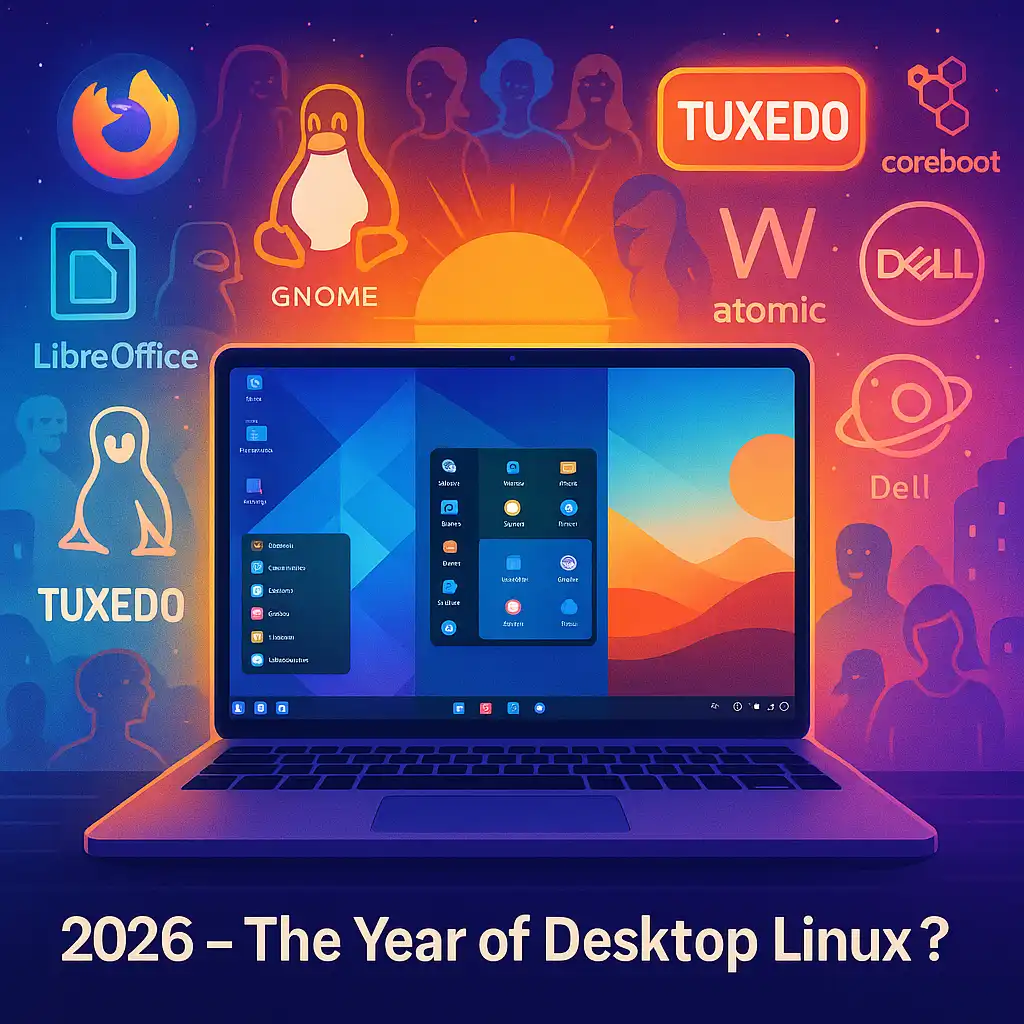
For as long as I’ve been in tech, the phrase “The Year of Desktop Linux” has been bandied about more often than I care to count. Yet, as we move into 2026, something feels different. The Linux desktop landscape is seeing a burst of new energy: innovative distributions, maturing desktop environments, hardware vendors giving us real choices, and a growing sense that people are actually, finally using Linux desktops for more than just a hobby. So—is 2026 truly the year? Let’s dive into the most notable signs of change.
Wayland Takes (Almost) All
One of the headline shifts this year is the almost wholesale transition of major distributions and desktop environments to Wayland. Manjaro 26.0, for example, now defaults most desktop environments (DEs) to Wayland, relegating the aging X.Org session to a legacy, fallback role. This is a major confidence boost for the long-in-development display protocol, which promises better security, smoother rendering, and modern features. If you absolutely need X.Org, your options are narrowing fast[1].

The Budgie desktop’s latest 10.10 release is officially Wayland-only as well, marking an end to its X11 chapter[2]. And, with KDE Plasma racing towards its 6.6 release, Wayland sessions are undeniably robust and ready for daily driver status for most users[3].
Hardware and Mainstream Adoption
It used to be that picking a pre-installed Linux laptop meant compromising on design or support. Not anymore. Brands like TUXEDO Computers are iterating rapidly, with the latest Gemini 17 and InfinityBook Max 16 Gen10 offering premium hardware, tailored firmware (hello, Coreboot!), and true user-focused features like high-end OLED displays and long battery life[1], [3].
OEM support is also on the up. Dell and others continue their Linux-first launches for professional and consumer lines alike. With these partnerships, you no longer need to be a sysadmin to enjoy a Linux-powered laptop that ‘just works.’
A New Generation of Distributions
The Linux world is buzzing with new and revitalized distros. Some of the most intriguing recent entrants?
- ObsidianOS brings reliable, atomic A/B partition updates (think seamless and safe upgrades), offering a level of desktop resilience we previously only saw in mobile and Chrome OS. Its UEFI-only focus feels like a nudge toward a high-reliability future, even if it’s not fully beginner-ready… yet[5].
- MX Moksha and AV Linux 25 are helping revive the Enlightenment desktop for users wanting something nimble and beautiful—a testament to the variety and experimentation still alive in the ecosystem[1].
- Legacy distros are evolving, too: Solus 4.8 dropped Python 2, and Zorin OS 18 hit a million downloads—evidence of broad, mainstream appeal[1].
Desktop Environments: Polished and Powerful
This year’s desktop environments feel snappier and more coherent than ever. KDE Plasma 6.5 (soon 6.6) keeps getting slicker and more dependable, GNOME 49 is a productivity marvel, and Cinnamon, MATE, and Xfce continue to mature. System76’s homegrown COSMIC desktop is now pre-bundled in major releases—another milestone for Linux-first innovation[1].
What’s more, nearly all these environments now support HiDPI, multi-monitor, touch and pen input, and deliver consistent theming. The need for post-install tweaks is vanishing.
Software, Community, and Compatibility
In 2026, Linux isn’t just a developer’s playground. Everyday users have access to polished browsers (with Firefox 146 already showing off AI-powered integrations[1]), powerful office suites, and popular apps like VLC, Shotcut, and GIMP with up-to-date versions across all major distros[2].
Large communities are pushing projects for non-technical users—easier installers, better hardware compatibility, superb documentation, and, critically, a helpful and welcoming support culture. Even on the driver front, things are rosier: NVIDIA 590 and Mesa 25.3 drivers mean excellent gaming and multimedia support right out of the box[1].
So… Is This “The Year”?
The answer—as always—is: “It depends.” Linux won’t overtake Windows or macOS overnight. But in sheer usability, style, and stability, desktop Linux in 2026 stands taller than ever before. User adoption is real, new hardware shines, software support is broad, and the dream of a stress-free Linux install for your daily machine is now a reality for many.
For me—a lifelong Linux desktop enthusiast—it’s not about a year. It’s about the trend. And in 2026, for the first time, it feels like the trend is truly unstoppable.
References
- Manjaro 26.0 Primary Desktop Environments Default to Wayland – Linux Magazine
- 9to5Linux – Linux news, reviews, tutorials, and more
- KDE Plasma 6.6 Desktop Is Coming on February 17th, Here’s What to Expect – 9to5Linux
- Linux Desktop Recommendations for 2026
- 9 New Linux Distros That Could Grow Big in 2026

Leave a Reply to Fact-Check (via Claude claude-sonnet-4-5-20250929) Cancel reply