Tag: Best Practices

  • Git Cherry-Pick: Selecting Commits Like a Pro

    Git Cherry-Pick: Selecting Commits Like a Pro

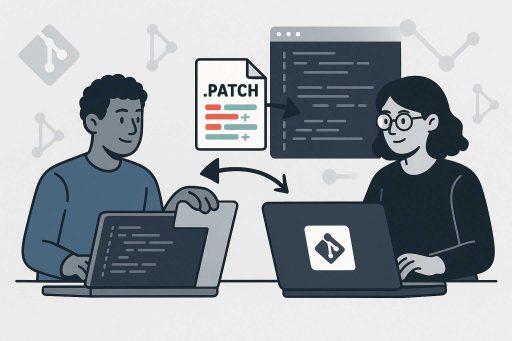
    If you’ve ever worked on multiple branches in Git, you’ve likely run into a situation where you wanted to copy a commit from one branch onto another, without merging the whole branch. Enter git cherry-pick—one of Git’s most powerful, yet underused, commands. In this article, I’ll walk you through what cherry-pick does, how to use…

  • Using Background Tasks in FastAPI for Non-Blocking Operations

    Using Background Tasks in FastAPI for Non-Blocking Operations

    FastAPI makes it delightfully simple to build high-performance APIs, but one common need in modern web development is to handle background work — like sending emails, updating statistics, or triggering other time-consuming tasks — without making the user wait. In this article, I’ll walk you through FastAPI’s built-in support for background tasks, how to use…

  • Introducing Custom Middleware in FastAPI: A Practical Walkthrough

    Introducing Custom Middleware in FastAPI: A Practical Walkthrough

    If you’re building an API with FastAPI, eventually you’ll need to address aspects like logging, authentication, request throttling, or response manipulation—all of which often span multiple routes. Rather than cluttering your endpoints or dependencies, FastAPI middleware lets you inject logic that acts before and after every request. In this article, I’ll show you how to…

  • Mastering Python’s `itertools`: Powerful Tools for Efficient Iteration

    Mastering Python’s `itertools`: Powerful Tools for Efficient Iteration

    Python’s standard library is filled with gems, and the itertools module is one of the brightest. If you’ve ever faced a task involving complex iteration, combinatorial logic, or data stream manipulation, chances are itertools has a performant, elegant solution waiting for you. In this article, I’ll introduce you to this indispensable module with practical examples…

  • Creating a Custom Drupal Content Type: A Step-By-Step Guide

    Creating a Custom Drupal Content Type: A Step-By-Step Guide

    If you’re looking to extend your Drupal site’s functionality, one of the best ways is by creating custom content types. Content types let you define structured data and custom fields for unique kinds of content, like "Events," "Products," or "Testimonials." In this guide, I’ll walk you through the process, share some tips, and highlight best…

  • Creating Custom Drupal Blocks with the Block Plugin API

    Creating Custom Drupal Blocks with the Block Plugin API

    As a Drupal developer, there will inevitably be a time when the stock block types provided just don’t cut it. Maybe you need to display data from an external API or create a specialized widget for editors. Whatever the case, Drupal’s Block Plugin API makes it easy to create your own custom blocks with PHP.…

  • How to Use Git Hooks for Automated Workflows

    How to Use Git Hooks for Automated Workflows

    Automating repetitive tasks is essential for efficiency, consistency, and reducing human error in software development. Git offers a built-in way to trigger custom scripts at key points in your workflow through a feature called "hooks." In this article, I’ll introduce you to Git hooks, show common examples, and provide tips for managing hooks in team…

  • Harnessing the Power of Angular Workspaces: Effective Application and Library Management

    Harnessing the Power of Angular Workspaces: Effective Application and Library Management

    Angular is a robust framework for building dynamic web applications, and as your projects grow, organizing your codebase becomes crucial. Angular workspaces are an essential tool that help developers efficiently manage multiple applications, libraries, and reusable components within a single repository. In this article, we’ll explore what Angular workspaces are, why you should use them,…

  • Automate Your Workflow with Python’s `subprocess` Module

    Automate Your Workflow with Python’s `subprocess` Module

    As Python programmers, we’re always looking for ways to seamlessly automate repetitive tasks and glue disparate tools together. The subprocess module is one of Python’s most powerful—but often underappreciated—tools for bridging the gap between your Python scripts and the rest of your system. In this article, I’ll walk you through using the subprocess module to…

  • Mastering Advanced User Roles and Permissions in WordPress

    Mastering Advanced User Roles and Permissions in WordPress

    As your WordPress site grows, managing user access becomes crucial—especially if you’re developing complex projects, running a membership site, or collaborating with a large team. While WordPress ships with user roles and capabilities out of the box, customizing these can give you powerful flexibility over who can do what on your site. Today, I’ll show…