Tag: Best Practices
-

Boosting Productivity with Python’s ‘shutil’ Module: Effortless File Operations
When working with files and directories in Python, you may have welcomed the ease of using os and pathlib for basic file system manipulations. But what if you need to copy, move, or delete entire directories, or manage file archives with just a few lines of code? This is where Python’s shutil module shines. In…
-

Effortless Timing in Python: Measuring Code Performance with the ‘timeit’ Module
As Python developers, we often find ourselves concerned with performance. Whether we’re optimizing a critical algorithm or simply curious about the speed differences between alternative implementations, having an accurate and reliable method to measure code execution time is essential. Enter the timeit module—a simple yet powerful tool in the Python Standard Library designed for precisely…
-

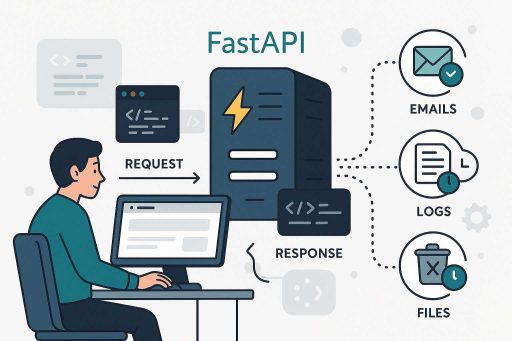
Testing FastAPI Dependencies: Techniques for Reliable Unit Tests
When building robust APIs with FastAPI, effective testing isn’t just about hitting endpoints; it’s about ensuring that all the components—especially dependencies—work as expected. FastAPI’s dependency injection system is incredibly powerful, but understanding how to write focused, maintainable tests for them can be a game-changer. In this article, I’ll walk through strategies for testing FastAPI dependencies—both…
-

Python’s pathlib: Modern File System Paths Made Easy
Interacting with the file system is a common—and often frustrating—part of programming. If you’ve spent time with Python, you probably remember the days of wrestling with os.path, string concatenation, and subtle cross-platform bugs. Thankfully, since Python 3.4, we’ve had a much more elegant alternative: the pathlib module. Let’s dive into how pathlib streamlines file and…
-

Understanding WordPress Theme JSON: Simplifying Site-Wide Customization
WordPress theme development has evolved rapidly with the advent of Full Site Editing (FSE) and block-based themes. One of the most powerful yet sometimes overlooked tools in this modern workflow is the theme.json file. If you’re looking to streamline and standardize the look, feel, and behavior of your WordPress sites or client projects, understanding theme.json…
-

Integrating LangChain with FastAPI: Building LLM-Powered APIs
Large Language Models (LLMs) are transforming the web application landscape, and frameworks like LangChain make harnessing their power easier than ever. If you’re already leveraging FastAPI to build your APIs, you can seamlessly combine it with LangChain to introduce advanced language capabilities into your backend services. What is LangChain? LangChain is a Python framework designed…
-

Implementing Versioned APIs in FastAPI: Structure for Flexibility and Reusability
Versioning your API is crucial for maintaining backward compatibility as your application evolves. FastAPI makes API versioning straightforward, and with some attention to your project structure, you can maximize reusability and flexibility for future iterations. Why Version Your API? API versioning allows you to make breaking changes to your endpoints while ensuring existing clients are…
-

Git Bisect: Debugging Your Project History with Binary Search
Debugging issues in a complex codebase can often feel like searching for a needle in a haystack, especially when you’re unsure when a certain bug was introduced. Thankfully, Git has a built-in tool that can help: git bisect. In this article, I’ll walk you through what git bisect is, how it works, and some tips…
-

Harnessing Python’s ‘enum’ Module: Elegant Solutions for Named Constants
When writing Python code, it’s common to need a set of related constants—think days of the week, user roles, or states in a workflow. While strings or integers can represent such values, they’re prone to typos and hard to keep organized. Enter Python’s built-in enum module: an often-overlooked gem that brings type safety, readability, and…
-

Custom Dependency Classes in FastAPI: Cleaner and More Reusable Code
As FastAPI projects grow, code organization and reusability become increasingly important. While FastAPI’s dependency injection system is very flexible, you’ve probably noticed that many dependencies are simple functions. But did you know you can write dependency classes, too? In this article, I’ll show you how and why to use classes as dependencies for cleaner, testable,…