

In the span of just a few months, OpenClaw has transformed from an obscure experimental project into what Nvidia CEO Jensen Huang calls “the most important software release in history” and “definitely the next ChatGPT.”[2] The open-source AI agent platform is sparking a global phenomenon that’s reshaping how we think about personal AI assistants—and raising urgent questions about privacy, security, and the future of AI development.
From Prototype to Phenomenon
OpenClaw’s origin story is remarkably humble. The platform began life as “Clawd,” a project released last November by Austrian programmer Peter Steinberger. After evolving through several iterations—including a stint as “Moltbot”—it was officially renamed OpenClaw in January 2026.[4] What happened next caught even seasoned tech observers by surprise.
Unlike traditional chatbots that simply respond to prompts, OpenClaw represents a fundamental shift toward agentic AI—systems that can autonomously complete tasks, make decisions, and take actions with minimal human guidance.[1] As Jensen Huang explained, “In one line of code, you can create for yourself your own agent. Then after that, just ask the agent to do whatever you want.”[2]
The China Phenomenon: Lobsters and Installation Parties
Perhaps nowhere has OpenClaw’s impact been more visible than in China, where the platform has triggered what some are calling “the 2022 ChatGPT moment” all over again.[1]
Chinese tech giants have moved with remarkable speed to embrace the platform. Tencent launched a full suite of AI products built on OpenClaw—dubbed “lobster special forces”—compatible with its ubiquitous WeChat superapp. Startup Zhipu AI introduced its own localized version featuring over 50 pre-installed skills available through “one-click installation.” ByteDance’s cloud unit Volcano Engine unveiled “ArkClaw,” a browser-based version that eliminates the need for complex local setup.[1]
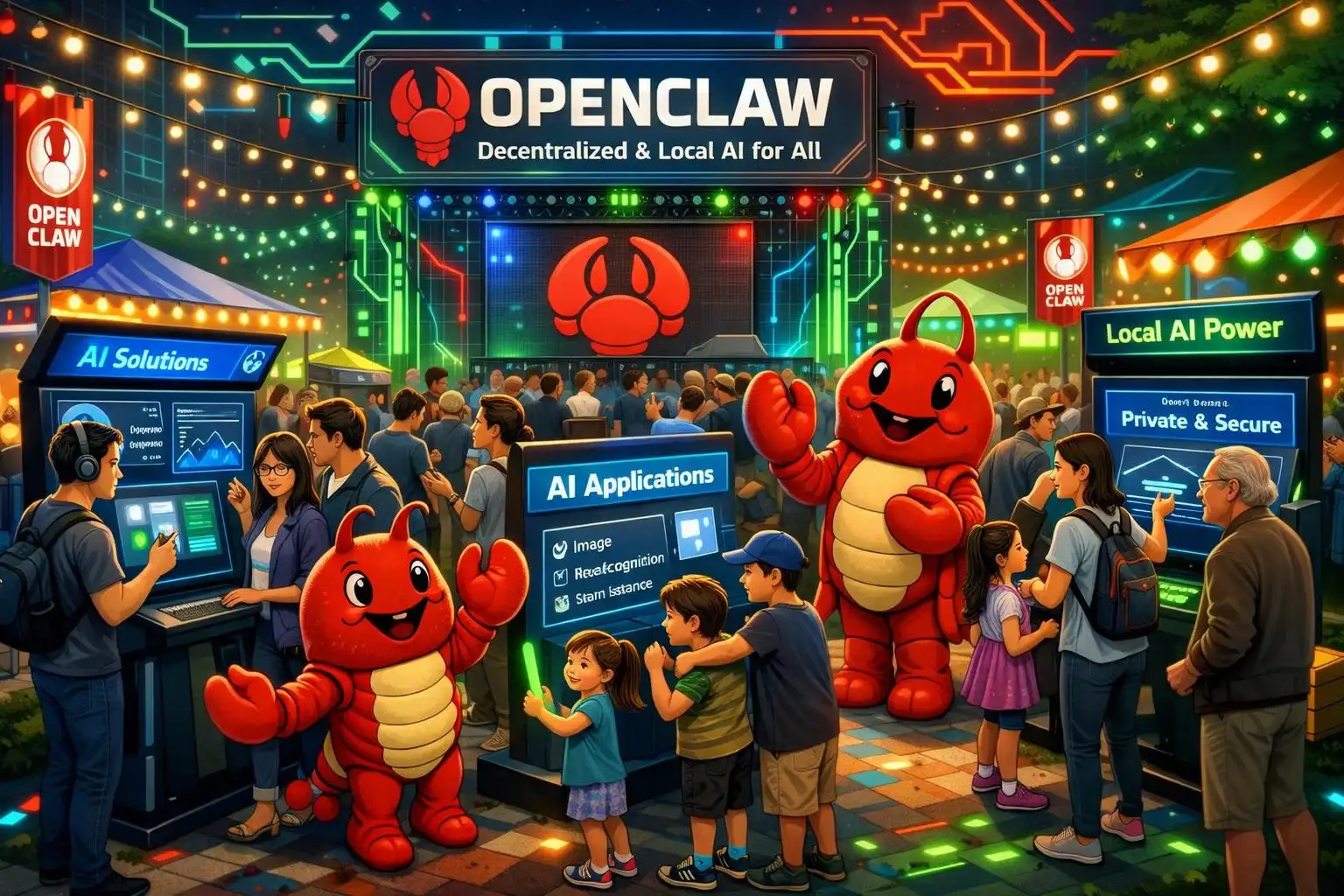
The enthusiasm has spilled into the physical world in delightfully unexpected ways. Chinese social media platforms have been flooded with posts about company-organized installation events, with some organizers handing out red lobster plush toys—a nod to OpenClaw’s crustacean-themed branding. Images of people queuing at tech company headquarters to have OpenClaw installed on their laptops have become emblematic of the platform’s grassroots appeal.[1]
Why OpenClaw Resonates: The Power of Local AI
What makes OpenClaw so compelling? Three key factors stand out:
1. True Autonomy: OpenClaw agents don’t just answer questions—they complete entire workflows. Jensen Huang illustrated this with a kitchen design example: an OpenClaw agent could study images, learn design tools, iterate on ideas, and improve its own output autonomously. “They’ll go off and learn how to design a kitchen. It will come back with design and reflect on that,” he explained.[2]
2. Runs Locally: Unlike cloud-based AI services, OpenClaw runs on users’ own devices. This means your data stays on your hardware, addressing privacy concerns that have plagued centralized AI platforms. The software itself is free—users only pay for the cost of running the underlying language models.[4]
3. Messaging Platform Integration: OpenClaw works seamlessly with WhatsApp, Telegram, Slack, Discord, and Signal, meeting users where they already communicate. This integration enables natural workflows—imagine AI agents facilitating conversations with colleagues about client management, product development, and finance, all within your existing messaging apps.[3]
The Commoditization Question
OpenClaw’s rapid rise has sparked a provocative debate: are expensive, proprietary AI models becoming commodities?
David Hendrickson, CEO of consulting firm GenerAIte Solutions, argues that OpenClaw “proved that fully autonomous AI can be run at home without relying on the Magnificent 7 or Big AI.”[3] This democratization of AI capability challenges the business models of companies that have invested billions in developing proprietary systems.
The open-source nature of OpenClaw means no single company controls it—a double-edged sword that’s both liberating and concerning.
The Security Elephant in the Room
For all its promise, OpenClaw’s rapid adoption has raised serious security concerns, particularly for enterprise use cases.
As Jill Popelka, board advisor at Darktrace, warns: “They’re also naive. They don’t have business judgment. They don’t fear consequence. And so we have to ensure that we have put some guardrails, really, around those AI agents as we use them, ensure that we know what data they have access.”[4]
Israeli developer Gavriel Cohen articulated the enterprise dilemma perfectly: “You can maybe deal with the risks for personal use, but when it comes to building a business, I can’t rely on this, and I don’t feel safe with it. It’s not responsible to connect my customer data to it.”[3]
The challenge is fundamental: OpenClaw is more like an experimental platform with almost no safety guardrails. For individual users, this might be an acceptable trade-off—security for convenience. For enterprises with sensitive data and compliance requirements, it’s a non-starter.
Enter NemoClaw: Nvidia’s Enterprise Solution
Recognizing both the opportunity and the security gap, Nvidia has moved quickly to build around OpenClaw’s momentum. The company announced NemoClaw, an enterprise-grade version that layers Nvidia’s software stack and security tools on top of the OpenClaw platform.[2]
The goal is to make AI agents secure, scalable, and ready for real-world business use—addressing the concerns that have prevented many companies from deploying hundreds or thousands of digital assistants with access to sensitive internal data.[3]
What This Means for Personal AI
OpenClaw represents a vision of personal AI that’s fundamentally different from what we’ve seen before. Instead of relying on centralized cloud services controlled by big tech companies, users can run sophisticated AI agents on their own hardware, communicating through their preferred messaging platforms.
This model offers several advantages:
- Privacy: Your conversations and data stay on your device
- Customization: Open-source means unlimited modification possibilities
- Cost: Pay only for the underlying model usage, not platform fees
- Integration: Works with the messaging apps you already use
Jensen Huang’s vision is expansive: “Every carpenter can now be an architect. Every plumber will become an architect. We are going to elevate the capabilities of everyone.”[2]
The Road Ahead
OpenClaw’s trajectory raises fascinating questions about the future of AI development. Will open-source agentic platforms become the norm, or will security concerns drive users back to centralized, controlled systems? Can the community develop adequate safety guardrails, or will enterprises require commercial solutions like NemoClaw?
What’s clear is that OpenClaw has tapped into something profound: a long-suppressed desire for AI assistants that genuinely help with real tasks, running on our own terms. The installation queues in Beijing, the lobster plush toys, the rapid corporate adoption—these aren’t just marketing gimmicks. They’re signs that we’ve reached an inflection point in how humans interact with AI.
For those of us who care about privacy, open-source development, and user control over technology, OpenClaw represents an exciting validation of principles we’ve long advocated. But it also serves as a reminder that powerful technology requires responsible deployment. The challenge now is ensuring that as OpenClaw and similar platforms evolve, they do so in ways that protect users while preserving the openness and autonomy that made them compelling in the first place.
The lobster has left the trap. The question is: where will it crawl next?

Leave a Reply to Fact-Check (via OpenAI gpt-4o) Cancel reply