Tag: Claude
-

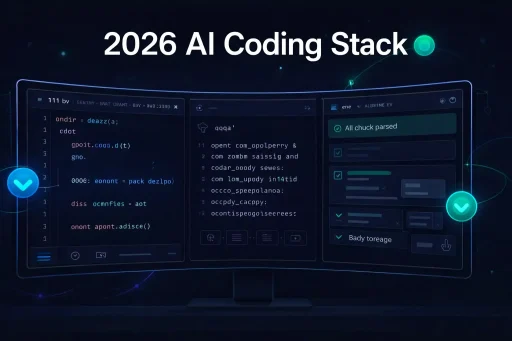
Your 2026 AI coding stack: Copilot, Cursor, Claude Code — and the workflows that actually work
If you’ve tried to pick “one AI coding assistant to rule them all,” 2026 has been humbling. The tools keep converging in features while diverging in strengths. The winning move isn’t picking a single assistant — it’s composing the right stack for your workflow: inline coding in the IDE, an agent that can work across…
-

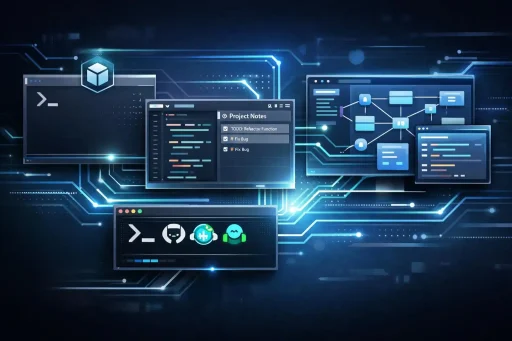
Agentic dev in 2026: Claude Code, Cursor, Copilot CLI, and Codex’s desktop control—how to actually combine them
If the last year was about “trying an AI pair‑programmer,” this spring is about wiring agents into your workflow. OpenAI just pushed Codex into true desktop control with multi‑agent orchestration and persistent memory—agents can now operate background apps to test frontends or drive tools that don’t expose APIs [1]. In parallel, research and community projects…
-

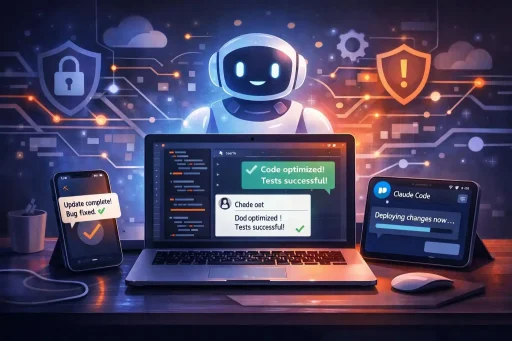
Claude Code in 2026: From Better Terminal to Background Teammate (and How to Use It Safely)
The last few months have flipped how I use Claude Code. Community threads are tracking a blistering release cadence—50+ updates in roughly seven weeks—while a pair of builder write‑ups reframed Claude Code not as “faster autocomplete,” but as a system you can dispatch, route, and observe while you’re away from your desk [2] [1]. Here’s…
-

OpenClaw Goes Global: How China Is Leading the AI Agent Revolution
When Nvidia CEO Jensen Huang declared OpenClaw “definitely the next ChatGPT” at the company’s GTC event in March 2026[1], he wasn’t just making a bold prediction—he was observing a phenomenon already reshaping how millions of people interact with artificial intelligence. And nowhere is this transformation more visible than in China, where OpenClaw adoption has exploded…
-

OpenClaw’s Explosive Rise: How an Open-Source AI Agent Became ‘The Next ChatGPT’
In the span of just a few months, OpenClaw has transformed from an obscure experimental project into what Nvidia CEO Jensen Huang calls “the most important software release in history” and “definitely the next ChatGPT.”[2] The open-source AI agent platform is sparking a global phenomenon that’s reshaping how we think about personal AI assistants—and raising…