

You can feel the shift in what builders are shipping: this week’s open‑source drops weren’t new models—they were operational bricks. Gateways to normalize model access. Durable memory layers so your agent remembers past sessions. CLI tools that pass a plan to a second agent and keep you in the loop from your phone. And rulesets to make all of it governable across Cursor, Claude Code, Codex, and friends.
Across the “opencode” topic alone, projects like NightMe (remote‑pair developer agent with phone monitoring), Axonhub (AI gateway with failover and cost controls), Aimem (session journaling to SQLite), Handoff (CLI coordinator/executor), Vibeporter (migrate chats/configs between interfaces), Capy (privacy‑first context virtualization over MCP), and TreeMan (ephemeral Git worktrees for agent experiments) all updated in the last couple of days—exactly the kind of parts teams need to move from vibe coding to reliable automation at the repo edge.[1]
Why this matters now
Most teams aren’t picking a single “best agent.” They’re picking an operating mode (IDE‑native vs CLI‑native), then wiring governance and infra around it.
- IDE‑based agents (Cursor, Windsurf, Copilot) optimize for visual diffs, inline reviews, and editor‑native edits—great for full‑stack work and fast product iteration.
- CLI‑based agents (Claude Code, Gemini CLI, Aider, Cline, Codex CLI) excel at deep refactors, scripted test runs, and batchable tasks from the terminal.
That split is no longer theoretical; it’s how teams choose day‑to‑day, with Claude Code, Cursor, and OpenAI Codex each fitting different styles and controls.[2]
A weekend stack that actually composes
Here’s a practical, reversible setup I’d run on a new repo to get autonomy without losing control.
1) Put a router in front of every agent
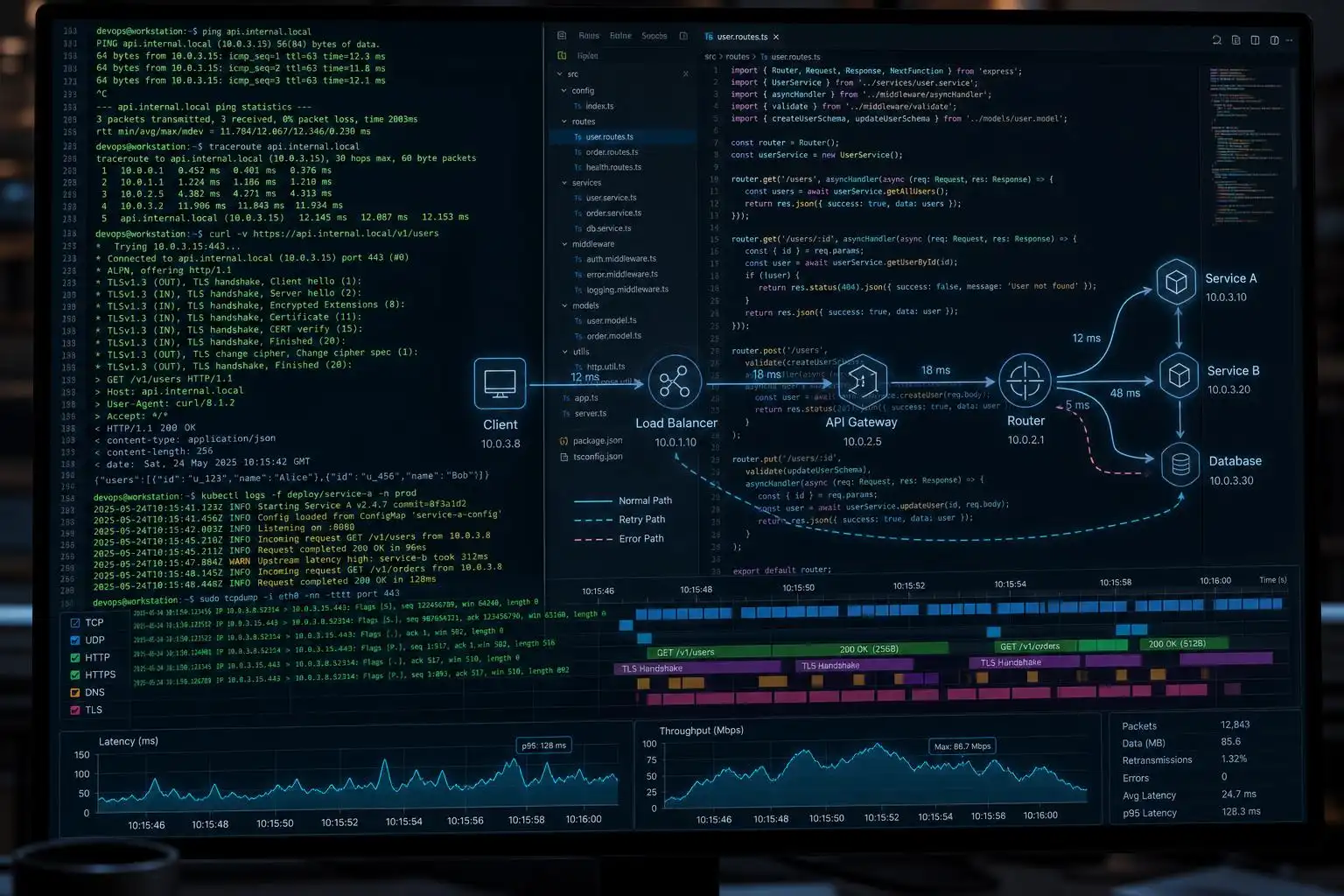
Drop a gateway so all agents speak one API and you get failover, load balancing, cost caps, and tracing. Axonhub is built for “use any SDK to call 100+ LLMs,” with built‑in failover, load balancing, cost control, and end‑to‑end tracing—exactly the safety rails you want before you scale token spend.[1] If you need a broader ecosystem or different ergonomics, the community catalogs multiple routers and proxies—claude‑code‑router, 9router, opencodex, copilot‑api, claude‑code‑proxy—and observability add‑ons like claude‑code‑otel and ccglass for “what did my agent actually send?”[3]
Example: point your tools at a local router.
# .env
LLM_API_BASE=http://localhost:8080/v1
LLM_API_KEY=local-dev

# router.yaml (illustrative)
providers:
  - name: primary
    type: openai-compatible
    base_url: https://api.openrouter.ai/v1
    api_key: ${OPENROUTER_KEY}
  - name: fallback
    type: anthropic-compatible
    base_url: https://api.anthropic.com
    api_key: ${ANTHROPIC_KEY}
routes:
  - match: {model: any}
    strategy: failover
    order: [primary, fallback]
limits:
  max_tokens_per_minute: 120000
  max_cost_per_hour_usd: 5
tracing:
  otlp_endpoint: http://localhost:4317
Point Cursor, Claude Code, Codex CLI, etc., at LLM_API_BASE and you’ve de‑risked model selection to a config file.
2) Give the agent session memory that survives crashes
For anything longer than a one‑shot edit, a journaling memory is the difference between “try again from scratch” and “pick up where we left off.” Aimem writes every turn to SQLite, curates durable facts, and syncs across machines—sane defaults for local‑first activity logs and a per‑repo knowledge base.[1]
# aimem.example.toml (illustrative)
[storage]
path = ".agents/aimem/session.sqlite3"
prune_after_days = 30

[facts]
curate = true
export_markdown = ".agents/facts.md"

[sync]
strategy = "git"
3) Enforce rules once, apply everywhere
Universal rulesets stop you from copy‑pasting “please write tests” into five tools. Rulix aims to sync one ruleset across Cursor, Claude Code, and AGENTS.md, while the “Andy Universal Agent Rules” template packages workspace governance that’s compatible with Claude Code, Cursor, Windsurf, Gemini, and more.[5]
# rules/AGENTS.md (excerpt)
- Tests: required for non-trivial changes; unit + minimal integration.
- Migrations: create reversible scripts; idempotent.
- Secrets: never exfiltrate; use env var placeholders.
- Large edits: propose plan + diff; wait for approval step.
Wire these into your agent startup prompt (CLI) or workspace instructions (IDE) and your expectations travel with the work.
Remote control and background teammates
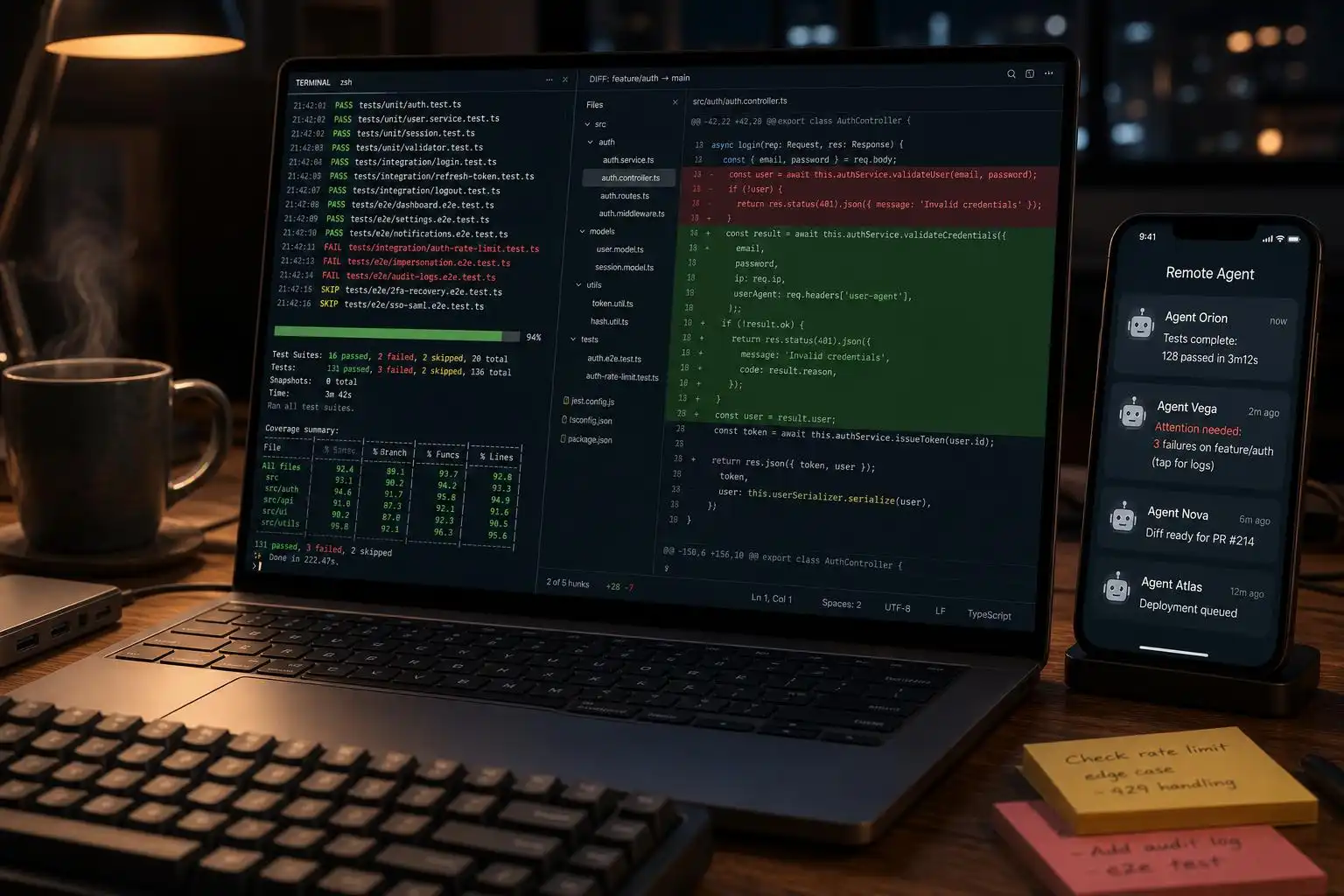
“Let it run while you sleep” is no longer vibes—it’s productized. NightMe bills itself as a remote‑pair developer agent that keeps you in the loop from your phone while Claude/Codex/OpenCode/Cursor take the wheel, a pattern that’s spreading across tools in this topic.[1] On the IDE side, Sixth AI lives inside VS Code, orchestrates sub‑agents for parallel work, and lets you steer progress and approvals over Telegram—start at your desk, manage from the couch.[4]
If you try this, pair it with router‑level cost caps and a ruleset that forces an approval gate before multi‑file edits land.
Privacy and tool access without overexposing your repo
Context “virtualization” is landing as a first‑class capability. Capy wraps LLM context with a privacy‑first layer and exposes tools via the Model Context Protocol (MCP), so agents can call capabilities without getting raw access to everything—useful when you want powerful tools but tight data boundaries.[1] At the other end of the stack, teams are increasingly unifying provider access—projects like zen‑mcp‑server let Claude Code, Gemini, OpenAI, Grok, OpenRouter, Ollama, and custom models work as one surface, reducing per‑tool drift.[3]
IDE vs CLI in 2026: pick by review style, not hype
- If you want inline diffs and tight editor feedback loops, IDE agents like Cursor or Copilot shine. They’re excellent for everyday changes and onboarding.
- If you’re planning big refactors or batchable test cycles, CLI‑first agents like Claude Code or Codex CLI are still my pick. You’ll trade some comfort for power and reproducibility.
These aren’t mutually exclusive—many teams blend both, choosing tools based on review ergonomics, security posture, and true‑in‑practice cost per shipped change.[2]
Try it: a minimal, reversible workflow
- Stand up a router and set LLM_API_BASE for every tool. Add cost caps and OTEL tracing.
- Add Aimem (or similar) for SQLite‑backed session logs and curated facts per repo.
- Drop a rules/AGENTS.md and point Cursor/Claude Code/Codex at it; use Rulix or a template to sync across tools.
- For background runs, start with a single task plus an approval gate; only then try Telegram/phone control via an IDE agent like Sixth AI.
Smoke test it with a small change: “add a health endpoint, unit tests, and a CI check.” If the agent proposes a plan, runs tests, shows diffs, and respects your rules—ship it. If not, you’ve got traces, logs, and a single config surface to adjust.
Key takeaways
- Gateways, memory layers, and rulesets—not new models—are what make agent workflows reliable right now.[1]
- Pick IDE vs CLI by how you prefer to review changes; blend both for coverage.[2]
- Use a router/proxy and observability from day one; keep model choice a config change.[3]
- Background agents are real—pair them with approval gates and cost caps before you sleep on them.[4]
- Centralize governance with a universal ruleset so expectations travel across Cursor, Claude Code, and Codex.[5]
References
- opencode · GitHub Topics — https://github.com/topics/opencode?l=go&o=desc&s=updated
- 10 Best AI Coding Agents in 2026 – SmartOSC — https://www.smartosc.com/10-best-ai-coding-agent
- The Ultimate Claude Code Resource List 2026: Agents, … — https://www.scriptbyai.com/claude-code-resource-list
- Claude Fable 5, GPT-5.6, Kimi k3, Gemini-3.6 Flash, AI Agent, AI Copilot,and Debugger, Generative AI, Code Generator, Code Chat, Cursor, ChatGPT, Cline, Github Copilot, Codex, Code Assistant, Claude C – Visual Studio Marketplace — https://marketplace.visualstudio.com/items?itemName=Sixth.sixth-ai
- coding-rules · GitHub Topics · GitHub — https://github.com/topics/coding-rules


Leave a Reply