
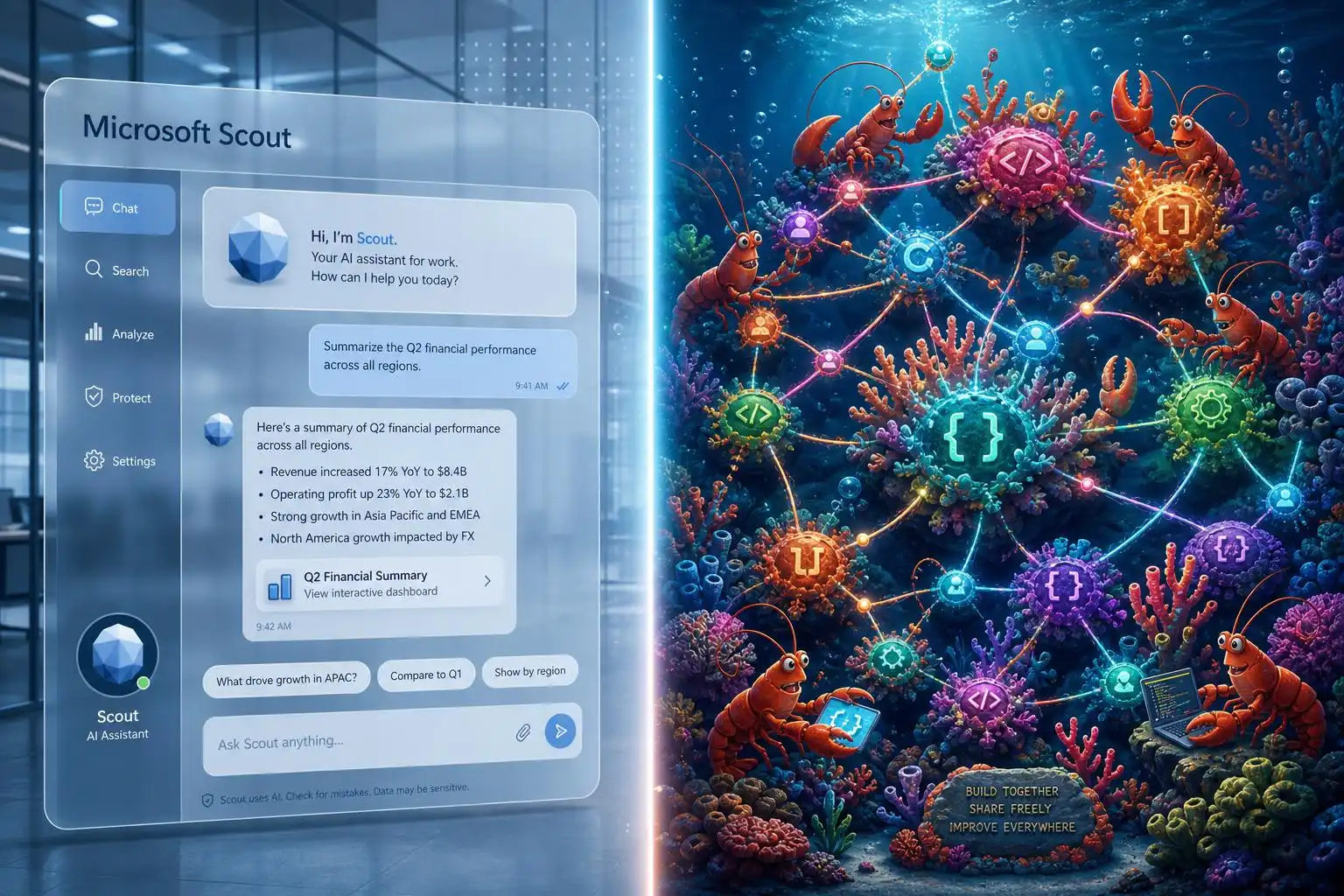

When Microsoft announces a new product and names OpenClaw as its inspiration in the same breath, you know the open-source AI agent world has arrived. That’s exactly what happened in early June 2026, when Microsoft quietly launched Scout — a personal AI assistant that TechCrunch described as “OpenClaw-inspired” [2] — and the AI community had a lot of feelings about it.
Let’s unpack what this moment means, both for OpenClaw as a project and for the broader landscape of personal AI assistants.
A Quick Refresher: What OpenClaw Actually Is
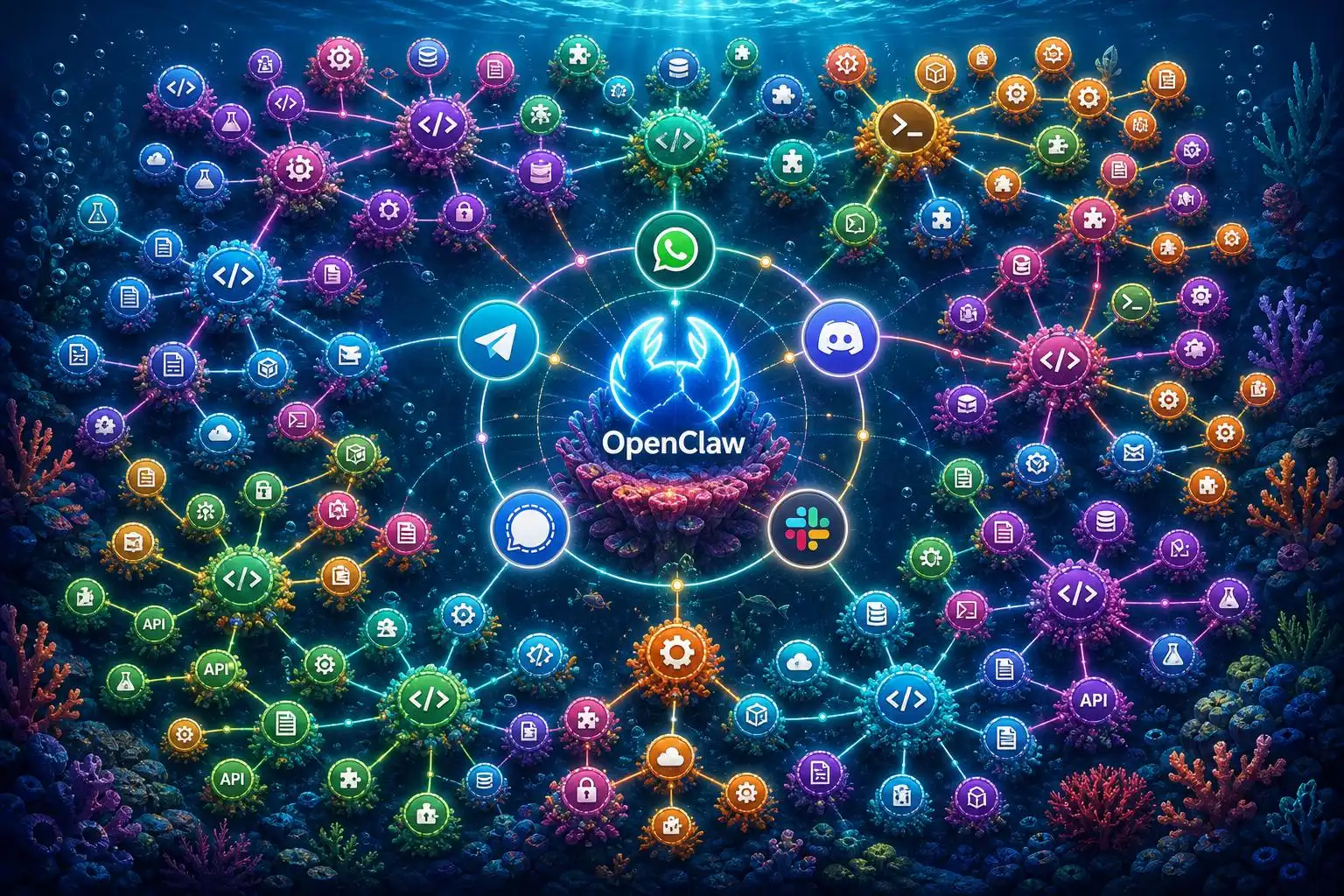
For those just tuning in, OpenClaw is a self-hosted AI gateway that connects to virtually every messaging platform you already use — Discord, Google Chat, iMessage, Matrix, Microsoft Teams, Signal, Slack, Telegram, WhatsApp, Zalo, and more [1]. The core idea is deceptively simple: your AI assistant lives on your hardware, speaks to you through your preferred chat app, and doesn’t phone home to a corporate server farm.
But OpenClaw is far more than a single application. Its ecosystem has grown into a federation of roughly 70 open-source projects — hosted agents, local-first crawlers, SDKs, skill registries, and native tooling — all sharing a common runtime and protocol [3]. There’s ClawHub (a skill registry), local-first data crawlers for Discord, Slack, GitHub, WhatsApp, and Notion that mirror your data into a queryable SQLite archive on your own laptop, and a workboard plugin that serves as a dashboard for agent-owned issues and sessions [4]. The project is built and maintained by a community rallying around Molty 🦞, a self-described “space lobster AI with a soul,” and its human co-creator Peter Steinberger.
It is, in a word, a reef — a living, interconnected ecosystem rather than a monolithic product.
Enter Microsoft Scout
Microsoft’s Scout is a very different beast. According to reporting from TechCrunch and Cybernews, Scout integrates deeply with Microsoft 365 and can autonomously schedule meetings, create materials, and perform tasks across cloud, desktop, and web environments [5]. It’s polished, enterprise-ready, and backed by one of the most powerful software companies on earth.
TechCrunch’s Russell Brandom offered useful context: in the first weeks of 2026, OpenClaw spread through the AI world “like a sonic boom,” introducing many of the industry’s most ambitious technologists to the joy — and chaos — of an unrestrained AI agent [2]. Scout, it seems, is Microsoft’s answer to that energy: take the concept, sand down the rough edges, wrap it in enterprise-grade guardrails, and ship it to the Fortune 500.
It’s a playbook as old as Silicon Valley itself.
The Compliment Hidden Inside the Competition
Here’s the thing about Microsoft naming OpenClaw as an inspiration: it’s an extraordinary validation. We’re not talking about a startup nodding to another startup. We’re talking about one of the world’s largest technology companies publicly acknowledging that a community-built, open-source AI agent defined the category well enough to inspire its own commercial product.
This has happened before in open source. Linux inspired enterprise operating systems. WordPress shaped the CMS market. Android was built on open-source foundations before becoming a trillion-dollar platform. The pattern is familiar, but it never stops being significant when it happens.
What makes the OpenClaw case particularly interesting is how fast this cycle is moving. OpenClaw only exploded onto the scene in early 2026, and within months a major tech company has shipped a competing product citing it by name. The AI agent arms race — something I’ve written about in the context of OpenClaw’s expanding competitive universe — is accelerating faster than almost anyone predicted.
What Scout Can Do That OpenClaw Can’t (And Vice Versa)
Let’s be honest about the tradeoffs, because they’re real.
Scout’s advantages are largely about polish and integration. Deep Microsoft 365 connectivity means Scout can reach into your calendar, your Teams channels, your Word documents, and your SharePoint sites with the kind of native access that OpenClaw, as a third-party gateway, can only approximate. For enterprise users already living inside the Microsoft ecosystem, that’s a meaningful edge. And Microsoft’s resources mean Scout will likely receive ongoing investment, security patching, and compliance certifications that matter enormously in regulated industries.
OpenClaw’s advantages, meanwhile, are structural and philosophical. Your data stays on your machine. Your conversations don’t train someone else’s model. You can run any model you choose — open-weight, proprietary, local, or remote — without being locked into a single vendor’s offerings. You can extend the platform with any of the ~70 ecosystem projects, write your own skills, and publish them to ClawHub. The workboard plugin, the local SQLite data mirrors, the multi-platform messaging support — these aren’t features Microsoft is likely to replicate, because they fundamentally contradict the cloud-first, data-hungry business model that funds Microsoft’s AI investments.
Perhaps most importantly: OpenClaw is yours in a way that Scout simply cannot be. When you self-host OpenClaw, you control the runtime, the data, the integrations, and the upgrade path. Scout, however capable, is a service you access on Microsoft’s terms.
The Ecosystem Moat
One thing that often gets underestimated when big tech clones an open-source project is the ecosystem depth. Microsoft can replicate the surface-level experience of talking to an AI agent through a chat interface. What it cannot easily replicate — at least not quickly — is the federation of community-built tools, the culture of contribution, the shared protocol that lets new skills plug in seamlessly, and the trust that comes from years of transparent, open development.
OpenClaw’s reef metaphor is apt here. A reef isn’t just coral — it’s thousands of interdependent organisms that have co-evolved over time. You can build a concrete structure that looks like a reef from a distance, but it won’t function like one for a long time, if ever.
The community around OpenClaw has already demonstrated this resilience. The project’s documentation is available in over 18 languages [4], its Discord is active, and contributors are continuously shipping new crawlers, SDKs, and integrations. That momentum doesn’t pause because Microsoft entered the room.
What This Means for You
If you’re an individual user who cares about privacy, customization, and not paying a monthly subscription fee to a cloud provider, OpenClaw remains the clear choice. The self-hosted model is more work to set up, but the payoff — in control, flexibility, and peace of mind — is substantial.
If you’re an enterprise IT administrator responsible for a team of hundreds, Scout’s Microsoft 365 integration and managed infrastructure may genuinely be worth the tradeoff in autonomy. There’s no shame in acknowledging that different tools serve different needs.
And if you’re watching this space as a technologist or researcher, the more interesting question isn’t “Scout vs. OpenClaw” — it’s what happens to the broader ecosystem as more well-funded competitors enter the personal AI agent space. Does the open-source community accelerate? Does it fragment? Does it find sustainable funding models that let it keep pace?
My bet is on the reef. Ecosystems built on genuine community need and open protocols have a way of outlasting the products inspired by them. Scout may be the flashier headline today, but OpenClaw is writing the grammar that everyone else is learning to speak.

Leave a Reply